AI resume review for designers
Your portfolio is stunning but the ATS never sees it. Hiring systems evaluate text, not pixels. 8 AI reviewers show you what automated screeners and design hiring managers actually read on your resume, and what needs to change.
No credit card required. Free review every month.

Why designer resumes get filtered out
Design roles at competitive companies attract hundreds of applicants. Most use ATS screening before a design manager reviews anyone. Here is what trips up talented designers.
Portfolio link without context
A bare URL to your Behance or personal site tells the ATS nothing. Screeners evaluate text, not links. If your resume does not describe what is in the portfolio and what impact those projects had, the link is just dead weight.
No business metrics on design work
"Redesigned the checkout flow" is a task. "Redesigned the checkout flow, reducing cart abandonment by 23% and increasing conversion rate by 11%" is a result. Hiring managers want the second version. So do screeners.
Process descriptions without outcomes
Detailing your design process (research, wireframes, prototypes, testing) shows how you work. But without outcomes, it reads like a textbook chapter, not proof of impact. Process plus results survives screening. Process alone does not.
Visual resume formats that break ATS
Designers love beautiful resumes with custom layouts, icons, and color-coded sections. ATS parsers hate them. Your carefully designed two-column layout gets flattened into garbled text. Plain formatting is not a design failure, it is a strategic choice.
Cliche terms that add no signal
"Pixel-perfect," "user-centric," "design thinking." Every design resume uses these. They have become invisible to screeners. Specific language about your work, the problems you solved, and the users you served stands out. Buzzwords do not.
Missing research and data skills
Modern design roles expect research fluency. If your resume mentions usability testing, A/B experiments, analytics interpretation, or survey design, you match more keywords. If it only mentions visual tools, senior roles will filter you out.
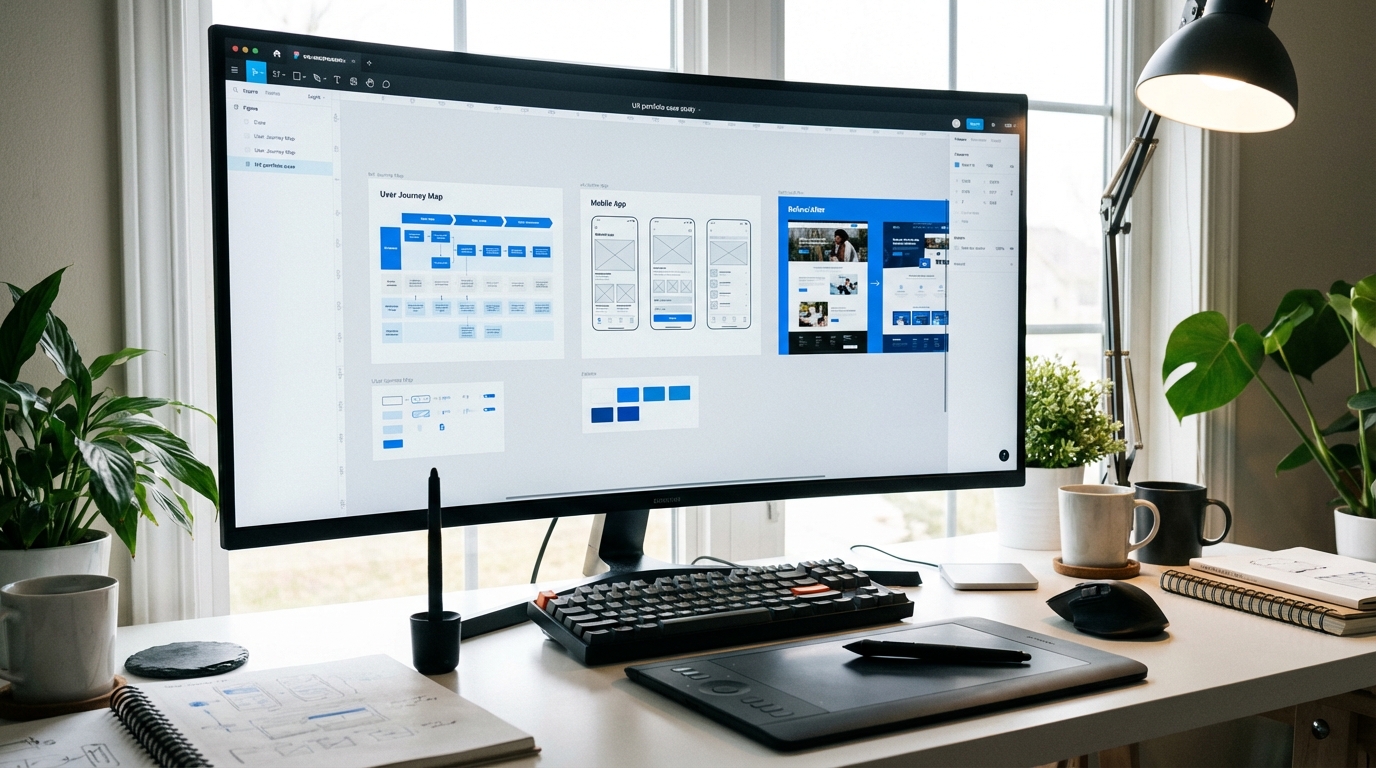
5 mistakes that get design resumes rejected
1. Leading with tools instead of impact
"Proficient in Figma, Sketch, Adobe Creative Suite" takes up valuable space. Tools are expected. Replace with "Led the design system migration to Figma, reducing component inconsistencies by 60% across 4 product teams." That shows mastery through impact.
2. Treating the portfolio as the entire resume
Some designers write minimal resumes and link to a portfolio for everything. But the ATS evaluates text. A recruiter doing a quick scan wants bullet points, not homework. Your resume needs to stand on its own, with the portfolio as a complement.
3. No mention of user research or testing
If your resume reads like a visual production role, you will get filtered for production roles, not design leadership. Mention research methods, testing approaches, and data-informed decisions to match senior design keywords.
4. Design jargon without business translation
"Created a comprehensive design system with atomic components" means nothing to an HR screener. "Built a design system that cut development time by 30% and improved cross-team shipping speed" translates the same work into business language.
5. Same resume for UX, UI, and product design roles
A UX researcher resume should emphasize methodology and insights. A UI designer resume should show visual systems and implementation. A product designer resume needs both plus strategy. One resume for all three means you match none of them well.
Frequently asked questions
What does an AI resume review check on a design resume?
Our 8 AI reviewers evaluate whether your resume communicates business impact, not just visual skill. They check portfolio presentation, quantified design outcomes, process articulation, ATS compatibility, and whether your resume positions you for the specific design role you are targeting.
My portfolio speaks for itself. Why do I need a resume review?
Because the ATS never sees your portfolio. Automated screening systems evaluate the text of your resume, not Figma prototypes or Dribbble shots. If your resume does not describe your design impact in words and numbers, you get filtered out before anyone clicks your portfolio link.
Can I get a review tailored to UX vs UI vs product design?
Yes. When you upload your resume, you specify the target role. The reviewers calibrate their feedback accordingly. A UX researcher resume gets different advice than a visual designer or a product design lead resume.
How much does it cost?
Free tier: 1 review per month with 3 of 8 reviewers, callback score, and top issues. Pro at $9.99/mo for unlimited reviews with all 8 reviewers, chat, and full feedback. Or $1.99 for a single full review. No credit card needed to start.
Show hiring managers the impact behind the pixels
Your portfolio tells one story. Your resume needs to tell another. 8 AI reviewers help you get it right.