AI resume review for international applicants
You are qualified for the role, but your resume follows conventions from a different market. US hiring systems penalize unfamiliar formats, unclear authorization status, and company names they do not recognize. 8 AI reviewers show you exactly what American recruiters and ATS screeners will flag, and how to fix it before you apply.
No credit card required. Free review every month.

Why international resumes get filtered out
The US job market has specific resume expectations that differ from almost every other country. Automated screeners are built around those expectations. Here is what gets qualified international candidates rejected before a recruiter ever sees their application.
Non-US format signals
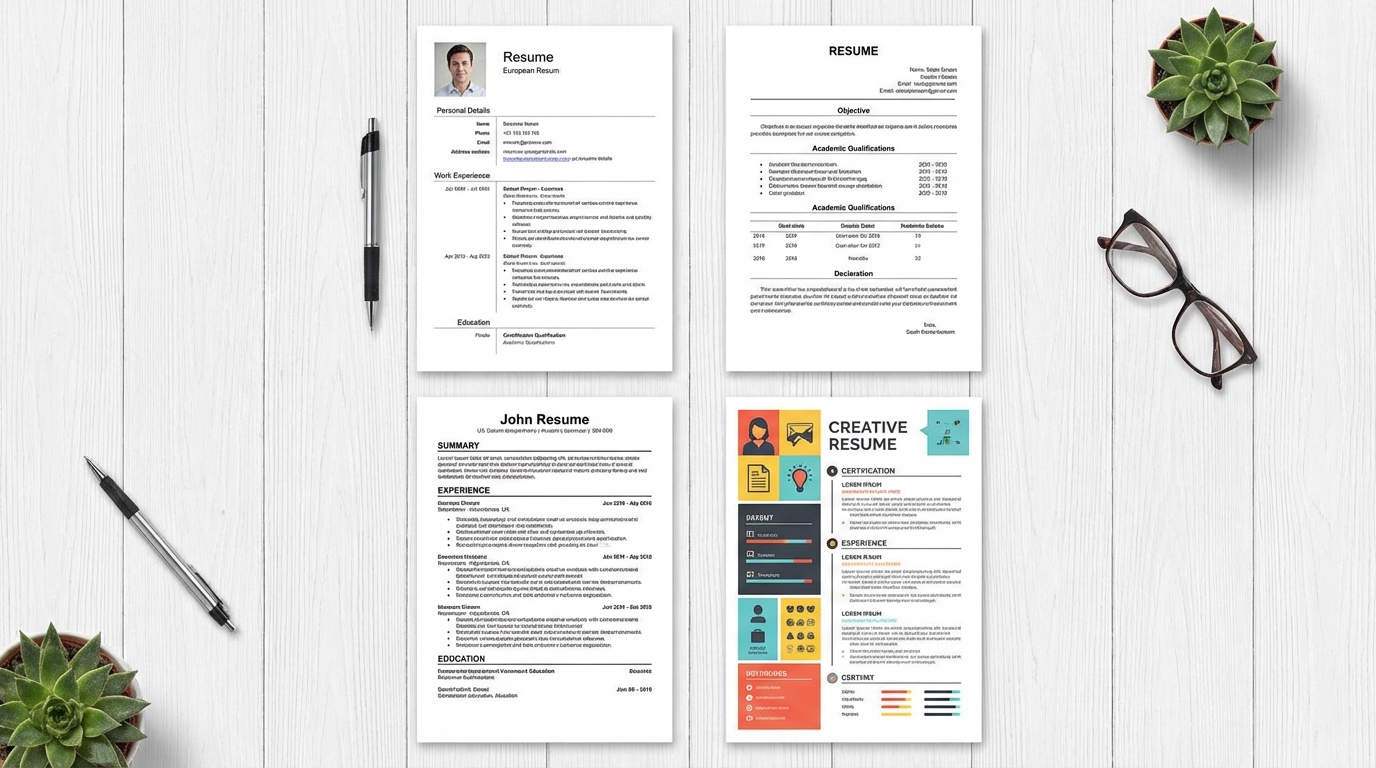
Photos, dates of birth, marital status, nationality fields, and "declaration" sections are standard in many countries. In the US, they are immediate red flags. ATS systems may parse them incorrectly, and recruiters will question why they are there.
Visa and authorization confusion
Leaving work authorization ambiguous is one of the fastest ways to get filtered. Recruiters screen for this early. If your resume does not clearly state your authorization status, many will assume the worst and move on.
Degree equivalency unclear
A "Bachelor of Technology" from India or a "Diplom-Ingenieur" from Germany may be equivalent to a US degree, but screeners do not know that. Without explicit equivalency language, your education section creates confusion instead of credibility.
Regional date and phone formats
Writing dates as DD/MM/YYYY or phone numbers without a US-compatible country code creates small friction points that add up. ATS systems may fail to parse non-standard formats, and recruiters may not bother to decode them.
Company names without context
Reliance Industries, Infosys, Tata Consultancy - these are massive companies, but a US recruiter scanning 200 resumes may not recognize them. Without a brief descriptor like "Fortune 500 conglomerate, $80B revenue," your experience at a global giant reads like a small unknown firm.
Language proficiency framing
Listing "English: fluent" can paradoxically raise concerns. Native English speakers never list it. For international applicants, the resume itself should demonstrate English fluency through strong writing. If you list proficiency levels, do it for additional languages, not English.
5 mistakes that get international resumes rejected
1. Including a photo or date of birth
In the US, resumes with photos or personal details like age, gender, or marital status can trigger bias concerns. Many companies actively screen these out to stay compliant with anti-discrimination laws. Remove all personal identifiers that are not your name, contact info, and LinkedIn URL.
2. Not explaining foreign company scale or reputation
Add a one-line descriptor after each company name. "Wipro (global IT services, 250,000+ employees, $10B revenue)" immediately gives a US recruiter the context they need. Without it, they have no frame of reference for your experience level.
3. Listing degrees without US equivalency
If your degree title is not instantly recognizable to an American recruiter, add equivalency context. "Master of Technology, IIT Delhi (equivalent to US MS in Computer Science)" removes all ambiguity and lets ATS systems match your education correctly.
4. Handling visa status awkwardly
Do not bury your work authorization at the bottom or explain it in a paragraph. A single clear line near the top, "US Green Card Holder" or "Authorized to work in the US, no sponsorship required," eliminates the question. If you do need sponsorship, be upfront rather than hoping they will not ask.
5. Using non-US English spelling and formatting
Spelling "colour" instead of "color" or "organisation" instead of "organization" signals that your resume was not localized. Use US English throughout. Set your spell-checker to US English and watch for currency symbols, measurement units, and date formats as well.
Frequently asked questions
What does the AI review check for on an international resume?
Our 8 AI reviewers evaluate your resume against US hiring standards. They flag format issues like photos, personal information, and declaration sections that are normal in other countries but raise red flags in the US. They also check degree equivalency clarity, visa status handling, company context, and whether your language and formatting match American conventions.
I have work authorization. How should I present it on my resume?
Our reviewers assess how clearly your authorization status comes through. The goal is to remove doubt without over-explaining. A clean one-liner like "Authorized to work in the US" or "US Permanent Resident" near the top of your resume is usually enough. Our review flags when your handling creates ambiguity or raises unnecessary questions.
Will the review help with degree equivalency?
Yes. If you hold a degree from a non-US university, the reviewers flag whether it is clear to an American recruiter what level it represents. They suggest adding equivalency context, like "Bachelor of Technology (equivalent to US BS in Computer Science)" so screeners do not have to guess.
How much does the review cost?
Free tier: 1 review per month with 3 of 8 reviewers, callback score, and top issues. Pro at $9.99/mo for unlimited reviews with all 8 reviewers, chat, and full feedback. Or $1.99 for a single full review. No credit card needed to start. The same reviewers evaluate your resume regardless of your country of origin or target role.
Get your international resume ready for US hiring
Format corrections, authorization clarity, degree equivalency. 8 AI reviewers calibrated to American standards.